Research Stories
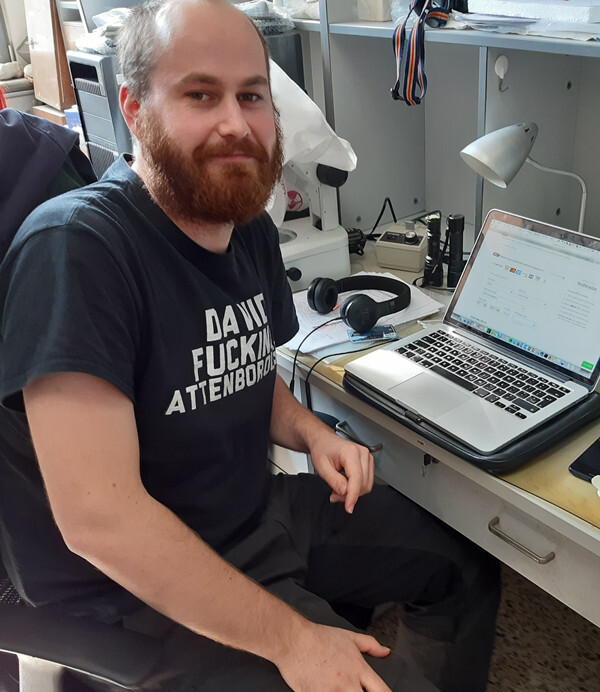
I started my PIFI postdoc at the Institute of Zoology (IOZ) of the Chinese Academy of Sciences (CAS) in September 2019 and finished it in August 2021. My postdoc position was based in the Group of Morphology and Evolution of Beetles led by Professor Ming Bai. The postdoc was one of the most memorable experiences of my life for many different reasons. I have had the privilege to work with a talented and friendly group of scientists in the group, including bachelors, masters, PhD students and fellow postdocs, as well as visiting researchers also funded by the PIFI. Before I even arrived in China, I was welcomed into the group and after arriving I received extensive help in settling down in Beijing (opening a bank account, finding an apartment, doing administrative tasks).
The IOZ and Beijing in general quickly started to feel like home for me since I was surrounded by quality science and colleagues and a fascinating culture to immerse myself in. I found my work time to be very enjoyable and stimulating with a collegial atmosphere and extensive support to achieve the goals of my PIFI, in particular in relation to accessing and studying rove beetle fossils and conducting their micro-CT scanning. My new colleagues were always at hand to help me in scientific and administrative tasks and always friendly (inviting me to lunch or dinner and helping order food etc.). In addition, Professor Ming Bai in particular facilitated my meeting with other researchers in my field for which I am most grateful.
Through the help of my colleagues at the IOZ, I was able to study new and interesting beetle fossils, using techniques such as micro-CT. The most rewarding work was our discovery of the earliest known fossil of the Rove Beetle Tribe Pinophilini which resulted in publication of an article in the journal Insects. This was one of the first fossils I studied at the IOZ and will contribute greatly to future work on the systematic and evolution of Paederinae rove beetles. Several other publications were completed at the IOZ and more are in preparation.
The PIFI postdoc has allowed me to develop collaborations with scientists at CAS and elsewhere in China and I have no doubt that these collaborations will continue long into the future. For example, in my new postdoc position, I will rely greatly on my established collaboration with Professor Ming Bai and his research group in order to further study Chinese fossils, especially those from the Early Cretaceous Yixian formation. The professional relationships will be vital for my future success, as will the friendships established in the research group. Outside the research group, I was able to interact with other foreign postdocs, which I think was also an important aspect of the PIFI. We were able to share our experiences and stories and discuss science and our research.
Outside of work, I relished the opportunity to live in China and experience the culture, art and food that Beijing in particular has to offer. I found the city extremely safe to live in and always felt welcomed by everyone. I am very grateful that my wife was also able to join me in China, where she was also welcomed by my new colleagues and given assistance to establish there. Since we were in China during the beginning of the COVID-19 pandemic, it was amazing to see how efficiently and quickly the authorities moved to prevent the spread of the virus — it was quite remarkable.
In my view, the development of CAS is moving in the right direction and the attitude and funding for science and development there is highly impressive. I have no great suggestions except to keep doing what you are doing.
Finally, thank you very much for this opportunity! It was amazing.