Research Progress
-
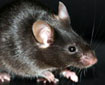 Chinese researcher cloned Tiny, the mouse from iPS cellsAug 27, 2009
 -
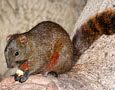 First record on acorn-embryo removal behavior by Pallas's squirrels (Callosciurus erythraeus)Many hoarding animals such as tree squirrels rely on plant seeds (e.g. acorn masting from oaks) as food reserves for their survival and reproductive success. As important defensive strategies, germination schedule and tannins in acorns could largely influence feeding and hoarding preferences of hoarding animals. However, it is poorly understood how hoarding animals utilize acorns as long-term food supply in response to these defensive strategies.Aug 24, 2009
 -
 NMR-based metabonomic evaluation of subchronic exposure to chlorpyrifos and carbaryl, alone or in combination in adult ratsWidely application of chlorpyrifos (CPF) and carbaryl (CAR) in agricultural and domestic settings is a serious threat to human health.Health risks caused by environmental polution are usually the outcome of chronic, low-dose and long-term exposure. It is generally not possible to deduce the combined toxicity of pesticides from traditional acute toxicity test. 1H nuclear magnetic resonance (NMR)-based metabolomics is an emerging interdisciplinary in recent years, which is a combination of physics, mathematics, analytical chemistry and information science on biological research. It is used to investigate the overall biological status of the body and function of the regulation through the analysis of metabolite spectrum of biological fluids and tissue extracts. Metabolomics plays an important role in promoting the research fields of toxicology studies, disease diagnosis, functional genomics, and so on.Aug 17, 2009
 -
 Aquaculture Enclosures Relate to the Establishment of Feral Populations of Introduced SpeciesJul 21, 2009
 -
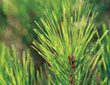 Effect of needle damage on the release rate of Masson pine (Pinus massoniana) volatiles.The effect of needle damage on the release rate of Masson pine (Pinus massoniana Lamb.) volatiles was examined. Needles were continuously damaged by mechanical damage (MDP) or by feeding of pine caterpillar (Dendrolimus punctatus) larvae (LFP); undamaged pine was used as a control (UDP). Volatiles were collected before damage, and at 16, 24, 40, 48, 64, 72, 88 and 96 h post-damage, and analyzed. The analyses revealed that 19 compounds identified as constitutive volatiles from UDP were terpenes and green leaf odors. The release rate of volatiles from MDP or LFP was higher than that from UDP.Jul 08, 2009
 -
Degradation of neuropathy target esterase by the macroautophagic lysosomal pathwayJun 25, 2009
-
The complete mitochondrial genome sequence of Geisha distinctissima (Hemiptera: Flatidae)Jun 15, 2009
-
Evaluation of blastomere biopsy using mouse model indicates the potential high-risk of neurodegenerative disorders in the offspringJun 15, 2009
-
The security control of genetically engineered microorganisms possessing the ability to degrade pesticidesJun 08, 2009
-
Toward understanding the distribution of Laurasian frogs: A test of Savage's biogeographical hypothesis using the genus Bombina.May 25, 2009