Research Progress
-
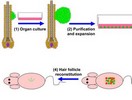 Hair follicle stem cells derived from single rat vibrissa via organ culture reconstitute hair follicles in vivoMay 18, 2012
 -
 Global and endemic Asian lineages of the emerging pathogenic fungus Batrachochytrium dendrobatidis widely infect amphibians in ChinaMay 07, 2012
 -
 Vigilance Patterns in Przewalski's Gazelle and its possible influencing factorsApr 28, 2012
 -
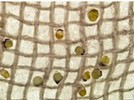 Dual roles of an odorant-binding protein in egg-laying process of two Helicoverpa moth speciesApr 20, 2012
 -
 Enhanced sensitivity to higher ozone in a pathogen-resistant tobacco cultivarInvestigations of the effects of elevated ozone (O3) on the virus-plant system were conducted to better inform virus pathogen management strategies. One susceptible cultivar of tobacco (Nicotiana tabacum L. cv. Yongding) and resistant cultivar (Nicotiana tabacum L. cv. Vam) to Potato virus Y petiole necrosis strain (PVYN) infection were grown in open-top chambers under ambient and elevated O3 concentrations. Aboveground biomass, foliage chlorophyll, nitrogen and total non-structural carbohydrate (TNCS), soluble protein, total amino acid (TAA) and nicotine content and peroxidase (POD) activity were measured to estimate the effects of elevated O3 on the impact of PVYN in the two cultivars. Results showed that under ambient O3,Nov 28, 2011
 -
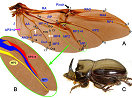 Evolutionary constraints in hind wing shape in Chinese dung beetles (Coleoptera: Scarabaeinae)Jun 30, 2011
 -
 Dissecting the Strand Folding Orientation and Formation of G-Quadruplexes in Single- and Double-Stranded Nucleic Acids by Ligand-Induced Photocleavage Footprinting.May 09, 2011
 -
The formation of stable G-quadruplexes in long double-stranded DNAMay 05, 2011
-
G-Quadruplex Hinders Translocation of BLM Helicase on DNAMar 21, 2011
-
 A new method for measuring the folding equilibrium constant of G-quadruplex from nucleic acidsMar 07, 2011