Research Progress
-
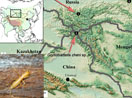 A second new species of ice crawlers from China, with thorax evolution and the prediction of potential distributionSep 28, 2010
 -
 Automatic call-independent individual recognition in four passerines using acoustic featuresSep 16, 2010
 -
 Regulation of neuropathy target esterase by the cAMP/protein kinase A signalNeuropathy target esterase (NTE) was identi?ed as the primary target of the organophosphorus compounds (OP) that cause a syndrome calledOP-induced delayed neuropathy (OPIDN), characterized by paralysis of the lower limbs due to degeneration of long axons in the spinal cord and peripheral nerves. It has been suggested that the inhibition and subsequent ageing of NTE initiates OPIDN.Aug 30, 2010
 -
 Bioaccumulation behavior of polybrominated diphenyl ethers in the freshwater food chain of Baiyangdian LakeAug 16, 2010
 -
 Urbanization sharply influences biodiversityAug 10, 2010
 -
 Mutualistic invasion of the invasive red turpentine beetle and its fungal associateRecent studies have investigated relationships between pairs or groups of exotic species to illustrate invasive mechanisms, but most have focused on interactions at a single trophic level. Here, we conducted pathogenicity tests, analyses of host volatiles, and fungal growth tests to elucidate an intricate network of interactions between the host tree, the invasive red turpentine beetle, and its fungal associates.Seedlings inoculated with two strains of Leptographium procerum isolated from Dendroctonus valens in China had significantly longer lesions and higher mortality rates than seedlings inoculated with other fungal isolates.Jul 20, 2010
 -
 Phylogenetic analysis and molecular characteristics of seven variant Chinese field isolates of PRRSVJun 30, 2010
 -
 Mature eggs generated from dormant ovarian folliclesJun 25, 2010
 -
 Discovery of Pluripotent Marker of Mouse Stem CellsJun 18, 2010
 -
 New systematics of Drepanoidea (Lepidoptera)Jun 04, 2010