Research Stories
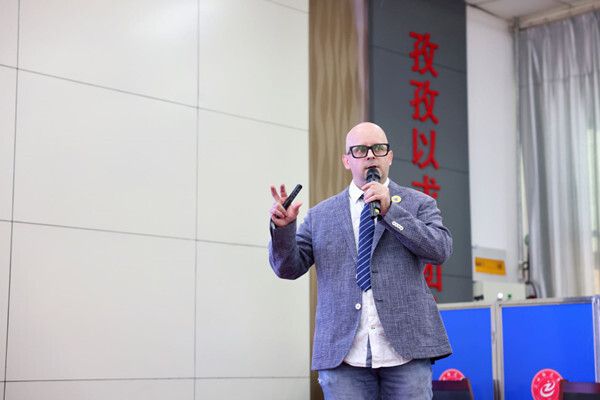
I originally learned of a position available in Beijing via a colleague in London. After some time deliberating, I decided it would be valuable to visit China for a postdoc.
Upon arrival we arranged accommodation, and signed a work contract for starting the postdoc. Colleagues at the Institute of Zoology (IOZ) of the Chinese Academy of Sciences (CAS) were very helpful in the organization of paperwork for the work contract and residence permit.
In the initial years, I worked hard with colleagues to publish, and we produced regular output and refined our research direction. In this period we became more and more involved in international collaboration, in programs including Surumer (sustainable rubber plantation), BEF-China and TreeDi.
Consistent with the mission of the CAS PIFI program, which is fostering international collaboration, BEF-China is an international 'mega-science' project. It is the world's largest tree diversity experiment located in Jiangxi Province, organized by Chinese and German ecologists. There have been three main projects based around this platform and I have been honored to have played an increasing role in them. The first was called BEF-China with which I was associated, the second was called TreeDi for which I was subproject co-PI, and the third program is called MultiTroph for which I am a subproject leader.
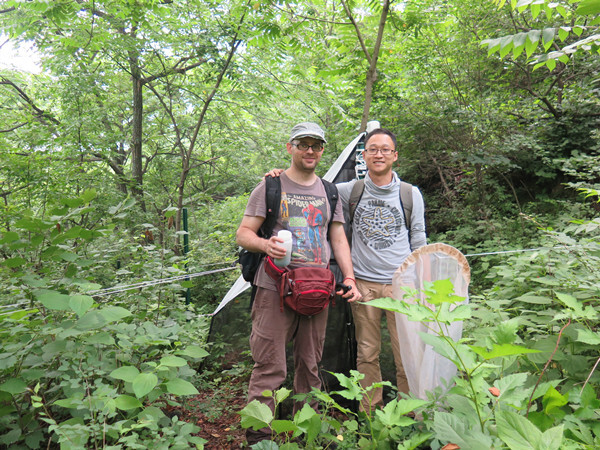
PIFI support has greatly enabled me to devote time and energy to this important program. The experimental site itself is an incredible place to witness, and I would encourage anyone in the biodiversity sciences to see if they have the opportunity. Hundreds of thousands of trees were originally planted in over 500 plots, designed according to a precise experimental setup of varying tree diversity. Many Chinese and international collaborators visit and work there, and thus it has a bustling and exciting atmosphere of many people in the knowledge that they are involved in valuable work. I have contributed to profiling of insect communities, particularly caterpillars. These are diverse and tightly impacted by the tree diversity gradient. I'm sure we will expand the insect groups we study, and reveal a no doubt complex web of interactions.
Work in China is attractive because of the very fast growing science environment, with good employment opportunities and solid funding for research. International workers are increasingly attracted to China. Facilities at the CAS institutes are excellent, labs are well equipped to do advanced work, and other labs in the institute are happy to assist and collaborate.
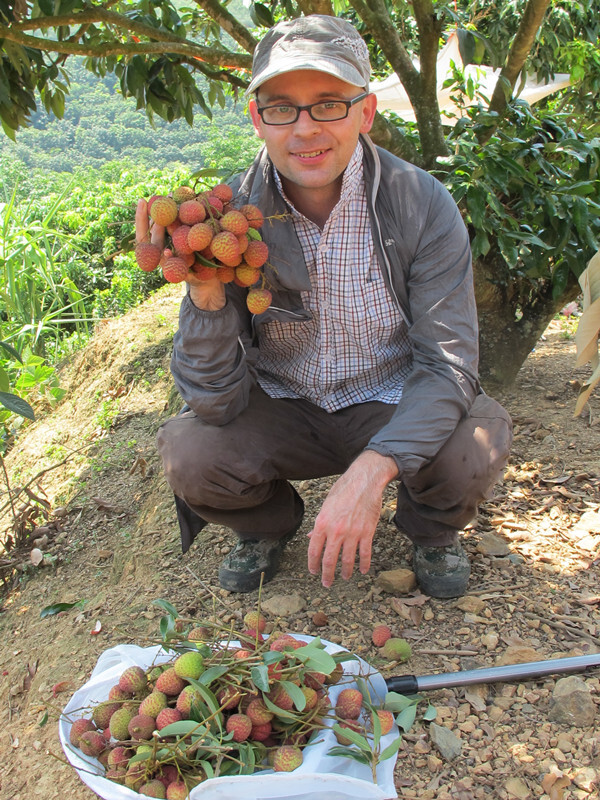
The PIFI support has enabled valuable opportunities to work in some unique locations in China. For example, as part of a project to understand honeybee interactions, I was able to travel to many remote parts of Yunnan Province to visit beekeepers.
Yunnan is part of a global biodiversity hotspot. Plant diversity has been relatively well mapped and is known to be exceptionally rich, while insect diversity is probably also very rich but much less described. For these two reasons Yunnan is a very special place for anyone with a love for biodiversity.
I have many memorable experiences of visits to natural areas of this region. I was lucky to spend time in a nature reserve in Xishuangbanna, with some colleagues who decided to set a light trap overnight. The incredible diversity of insects that turned up to that one light was an amazing thing to witness.
The capital of Yunnan, Kunming, is a similarly unique city. It is often called Spring City due its location on a plateau leading to a clement climate throughout the year. It is also a center of biodiversity, having a number of leading research institutes. Over the years, I have had many fruitful meetings with scientists from Kunming.
As for the future, I am excited to continue building on recently initiated, long-term projects that I expect will bring increasing dividends. And I would be honored to continue this work with the Chinese Academy of Sciences.