Research Progress
-
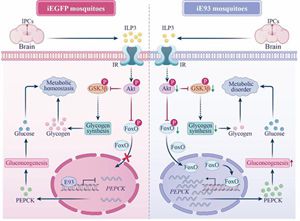 Researchers Uncover Key Gene Linking Mosquito Metabolism and ReproductionMosquito-borne diseases such as dengue, Zika, and yellow fever continue to pose a significant global health threat, infecting millions of people each year. However, current control efforts are increasingly challenged by the rise in insecticide resistance and the limited availability of effective vaccines. Understanding the molecular mechanisms underlying mosquito reproduction is therefore essential for developing new and sustainable strategies to control mosquito populations and reduce disease transmission.Nov 13, 2025
 -
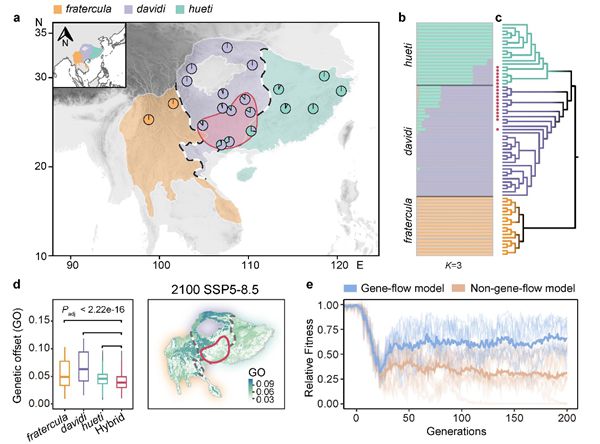 New Study Reveals Hybridization Enhances Montane Birds Adaptation to Climate ChangeClimate change is driving drastic environmental shifts and accelerating global biodiversity loss. Hybrid introgression has recently been recognized as an important mechanism facilitating rapid adaptation to historic climate change. However, empirical evidence remains lacking as to whether introgression can enhance future climate resilience, particularly for narrow-ranged species inhabiting mountainous regions that serve as biodiversity hotspots.Nov 12, 2025
 -
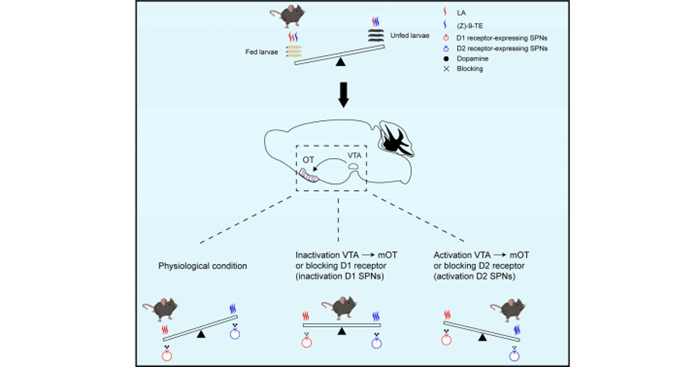 Scientists Discover the Neural Coding Mechanism Underlying Odor-guided Foraging Decisions in MiceIn natural environments, animals often rely on odors to evaluate the nutritional value of food. Odor molecules from food sources provide predators with crucial information regarding nutritional quality and palatability.Oct 18, 2025
 -
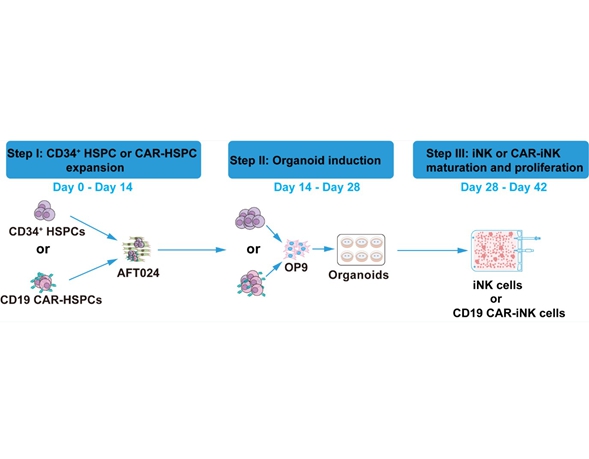 Researchers Develop New Method for Generating Natural Killer Cells to Fight CancerChinese researchers have developed a novel method to efficiently engineer natural killer (NK) cells for cancer immunotherapy.Oct 09, 2025
 -
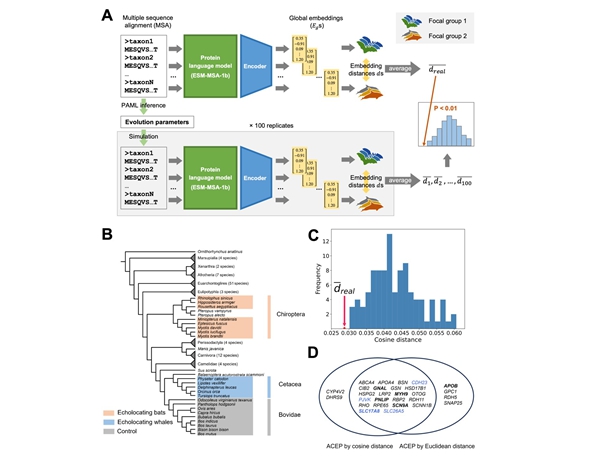 Researchers Reveal Complex Sequence Basis for Adaptive Convergent Evolution of Protein Functions by Deep LearningConvergent evolution refers to the independent emergence of similar shape and functions in different lineages of species, such as the wings of birds and bats. Recently, a research team led by Dr. ZOU Zhengting from the Institute of Zoology, Chinese Academy of Sciences proposed a novel approach based on cutting-edge deep learning methods to investigate the complex molecular basis of such phenomenon. The study was published on Sep 23 in PNAS.Sep 26, 2025
 -
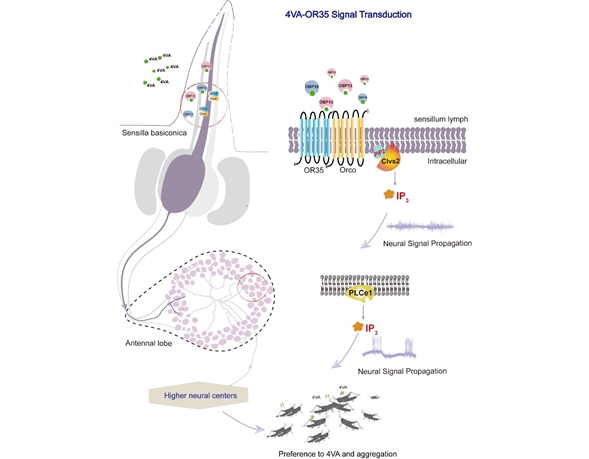 How Insects Smell: A New Pathway Turns IP3 Into the Key SignalAnimals rely on smell to find food, recognize mates, and avoid danger. In mammals, olfactory perception typically depends on G protein–coupled receptor (GPCR) pathways.Sep 11, 2025
 -
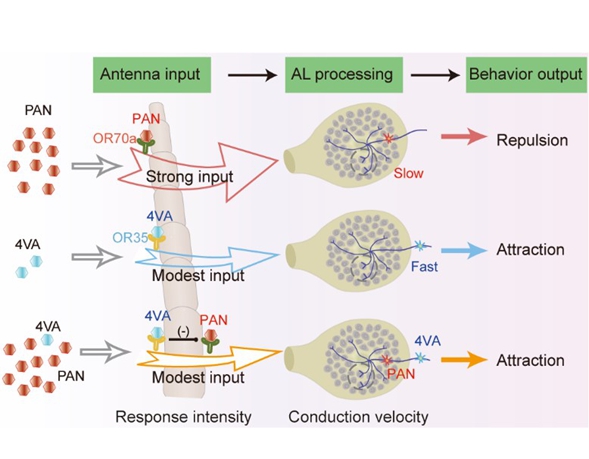 The Art of Locust Swarming: Balancing Attraction and RepulsionIn nature, animals need to perceive various signals. Olfactory signals are diverse, and insects recognize and utilize them to locate resources such as mates, food, and oviposition sites.Aug 22, 2025
 -
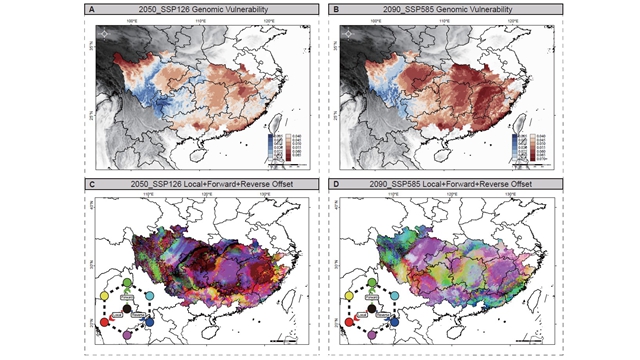 Integrating Population Genomics and Environmental Data to Predict Adaptation to Climate Change in Post-bottleneck Tibetan MacaquesThe results show that the Tibetan macaque is divided into two genetic groups: eastern China (including the Huangshan population in Anhui, the Wuyishan population in Fujian, and the Mangshan population in Hunan) and western China (including the Sichuan population, the Wumengshan population in Yunnan, and the Fanjing Mountain population in Guizhou).Jul 10, 2025
 -
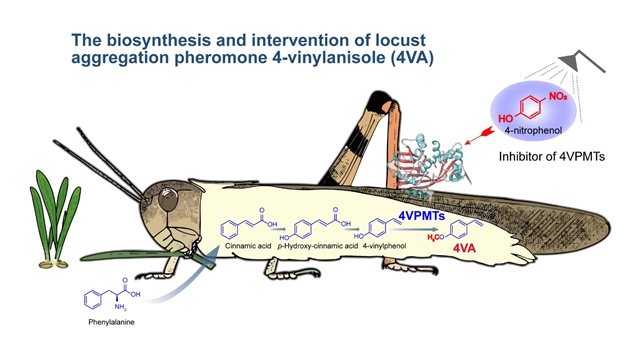 Nature | Decoding and Manipulating the Biosynthesis of Locust Aggregation PheromoneThe research team first determined that the synthetic substrate of 4VA is derived from plant phenylalanine. Subsequently, using KEGG combined with the metabolic pathway of phenylalanine, two chemically logical 4VA synthetic pathways were predicted.Jul 02, 2025
 -
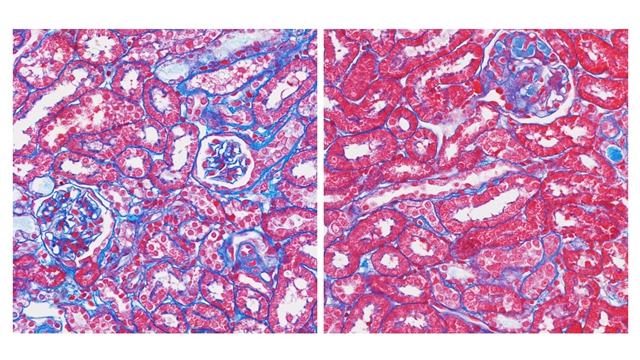 Scientists Decode Exercise’s Anti-Aging Secret: Kidney Molecule Mimics Workout BenefitsBEIJING— In a Cell study, researchers from the Chinese Academy of Sciences and Xuanwu Hospital discovered that exercise's anti-aging effects are mediated by betaine, a kidney-produced metabolite. This naturally occurring compound effectively mimics exercise by targeting a key inflammation regulator, opening avenues for "exercise-in-a-pill" interventions.Jun 25, 2025