Research Progress
-
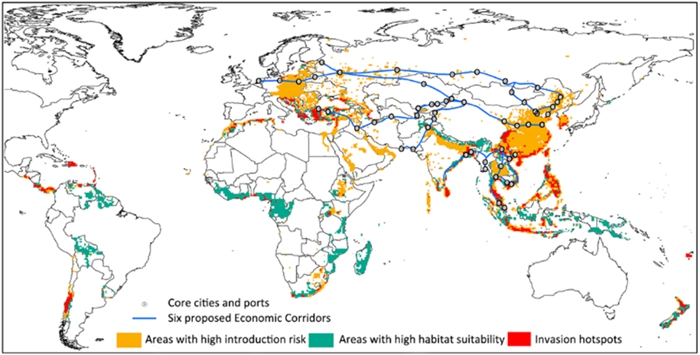 Scientists identify biological invasion hotspots for promoting the green development of the Belt and Road Initiative (BRI)Recently, a team led by Prof. LI Yiming from the Institute of Zoology, Chinese Academy of Sciences, conducted a comprehensive study evaluating the invasion risk of global alien vertebrates, to help facilitate the balance between development and conservation for the Belt and Road Initiative (BRI).Jan 25, 2019
 -
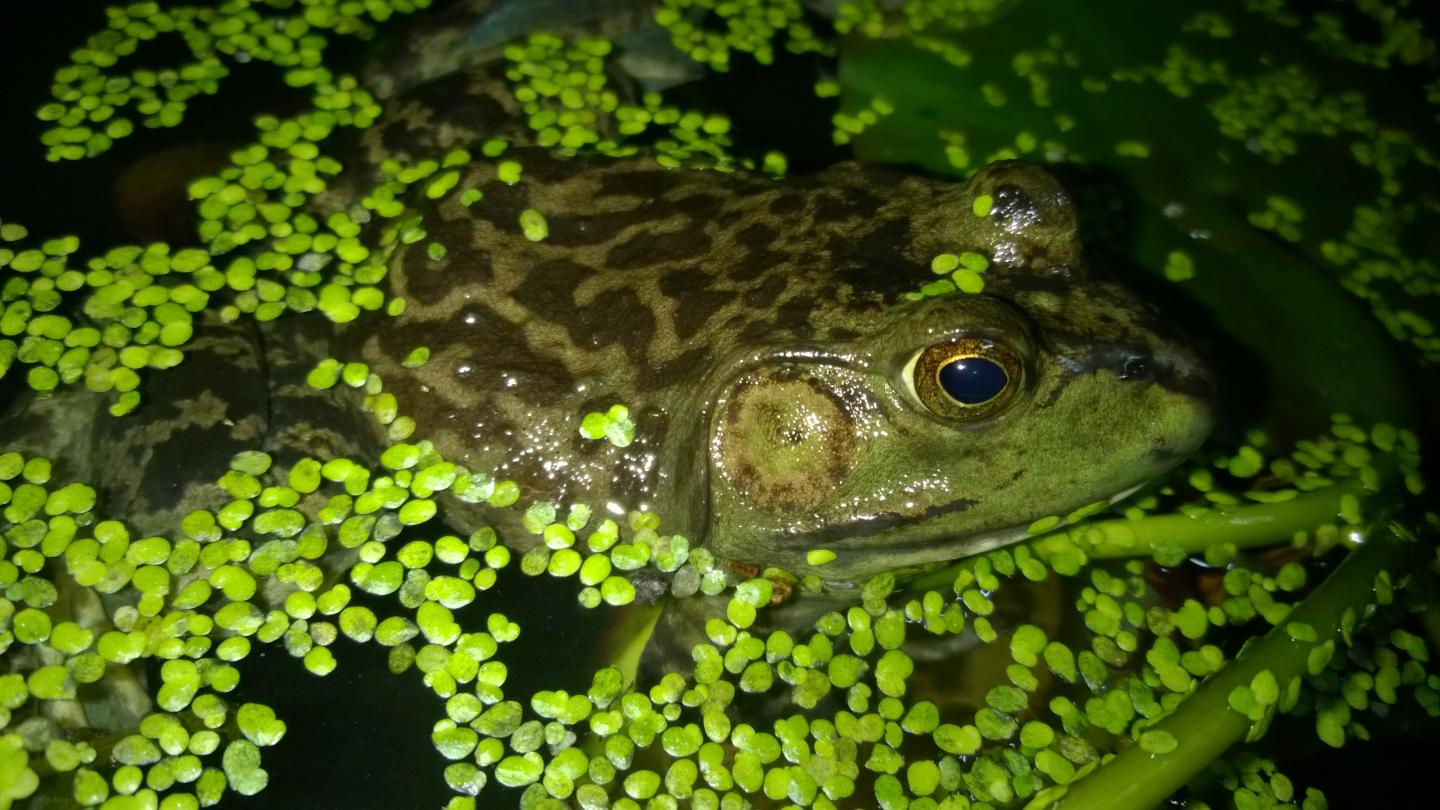 Biosecurity strategy needed for China's Belt and Road Initiative, researchers sayChina's Belt and Road Initiative (BRI), launched five years ago, includes more than 120 countries, linked by six proposed land-based Economic Corridors between core cities and key ports along traditional international transport routes. But, as new evidence reported in the journal Current Biology on January 24 shows, the risk of introducing invasive species into new areas is substantial as it would threaten native species and biodiversity.Jan 25, 2019
 -
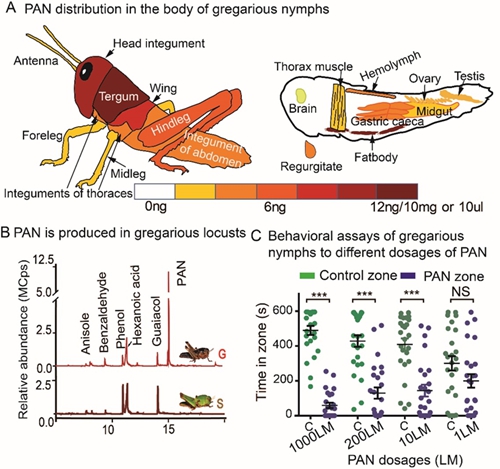 Scientists Identify Toxic Antipredator Defense Mechanism in LocustsAnimal aggregation is a very common phenomenon with important biological significance in the nature world. High-density locusts can form large swarms that are placed at a high risk of exposure to predators. Therefore, effective defense strategy of gregarious locusts is very crucial for their survival and migration.Jan 24, 2019
 -
 Wisdom is Power: Female Budgerigars Prefer Males with Stronger Cognitive AbilitiesDr. Jiani Chen, Yuqi Zou and Prof. Yue-Hua Sun from Institute of Zoology, Chinese Academy of Sciences, published a research paper "Problem-solving males become more attractive to female budgerigars" on Science, which was online on January 11, 2019. This is a story of male budgerigars gaining favor by learning feeding techniques.Jan 16, 2019
 -
Inhibition of PDE10A rescues impaired social behavior, learning and memory in mice with partial loss of MIR137Nov 07, 2018
-
 Research Shows Benefit of Giant Panda Conservation Far Exceeds CostThe giant panda is a flagship species of wildlife conservation worldwide, and its black and white pelage and cute appearance attract people all over the world. It is also an umbrella species of wildlife conservation; protecting the giant panda also protects other endangered wildlife sympatric with pandas.Jun 26, 2018
 -
 Hematopoietic hierarchy – an updated roadmapHematopoiesis, a dynamic and well-organized process, is maintained by a rare number of multipotent cells – hematopoietic stem cells (HSCs). HSCs not only can self-renew to sustain the stability of HSC pool, but also can differentiate into different types of mature blood cells.Jun 22, 2018
 -
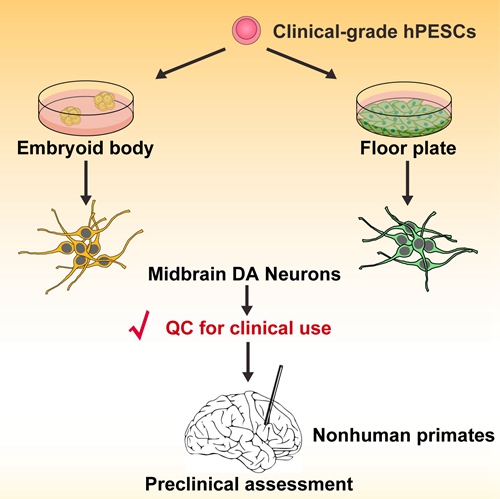 Human Embryonic Stem Cells-derived Dopaminergic Neurons Alleviate Symptoms of Parkinson’s Disease in MonkeysParkinson’s disease (PD) is one of the leading neural degenerative disorders, which is primarily caused by death of dopaminergic neurons in substantia nigra. This type of disorder is now possibly treated using stem cell-based strategy, such as transplantation of human embryonic stem cells (hESCs) differentiated derivatives.Jun 13, 2018
 -
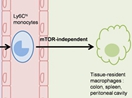 mTOR masters monocyte/macrophage developmentMonocyte/macrophage plays a critical role in innate immunity against invading pathogens and tissue repair during the period of inflammation resolution.Feb 26, 2018
 -
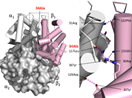 Scientists Reveal Divergent and Parallel Routes in Convergence of High-altitude Passerine BirdsAdaptive evolution in high-altitude vertebrates has been focused by scientists from medicine to evolutionary biologists for a century. Because of a different cardiorespiratory system and physiological regulation, the molecular mechanisms under adaptation in high-altitude environment evolved distinctively in birds from that in mammals.Feb 06, 2018