Research Progress
-
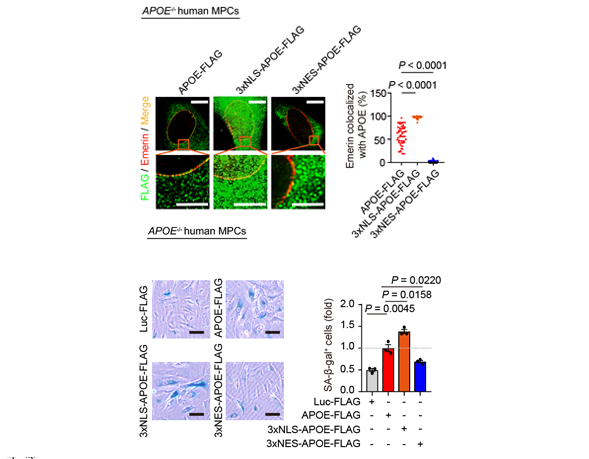 APOE destabilizes heterochromatin and drives senescenceProf. Guang-hui Liu and his colleagues from the Institute of Zoology and the Beijing Institute of Genomics, Chinese Academy of Sciences, have collaborated to reveal a novel role of APOE in destabilizing heterochromatin and driving senescence in human stem cells, which was published in Nature Aging on March 28th, 2022.Mar 29, 2022
 -
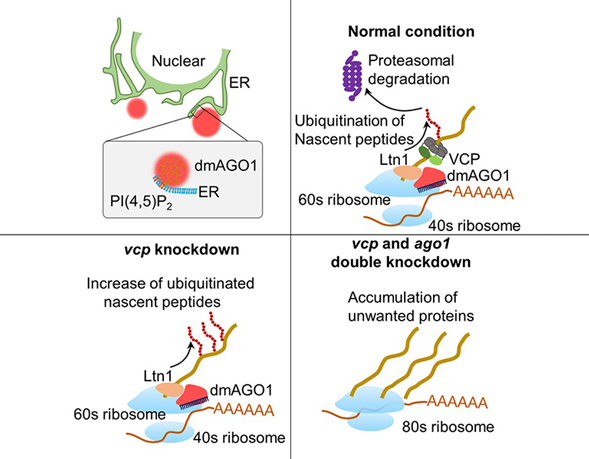 Researchers Reveal a Novel Role of AGO Proteins in Regulating Protein Quality Control on ERThe miRNA-mediated gene silencing and the ubiquitin-mediated protein quality control represent two fundamental mechanisms for controlling gene expression. However, little is about how these two processes are coupled to regulate gene expression. In the recent issue of Molecular Cell (11 a.m. ET on 23 March, 2022), Qinmiao Sun lab from Institute of Zoology of the Chinese Academy of Sciences and Dahua Chen lab from Yunnan University discovered that Argonaute proteins (AGOs) on the ER play a novel role in regulating protein quality control via lipid-mediated phase separation, substantially coupling post-transcriptional gene silencing and protein quality control processes to ensure efficient gene silencing.Mar 24, 2022
 -
 Researchers reveal a new role of circadian protein BMAL1 in antagonizing aging in primatesCircadian rhythms regulate sleep-wake cycles, metabolism, immune function, and reproduction in mammals. These processes are coordinated by the circadian clock, a biochemical oscillator that integrates physiological input signals with distinct oscillatory phases to regulate rhythms in organismal physiology, behavior, and metabolism. Accumulating evidence indicates that aging in mammals is intricately linked with alterations in circadian rhythms. However, whether and how the circadian machinery directly regulates stem cell aging, especially in primates, remains poorly understood.Mar 16, 2022
 -
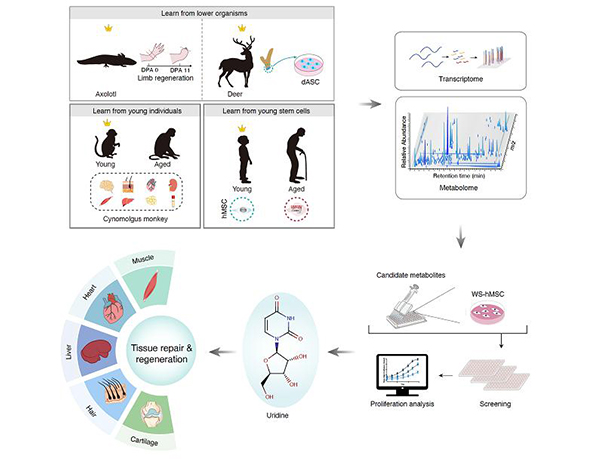 Researchers identify an endogenous metabolite that promotes multiple tissue regeneration and delays agingRegeneration is an important process of rejuvenating or replacing damaged, diseased, or aged tissues. Regenerative capacity declines with evolution and age. For example, salamanders in lower animals have the complete regenerative capacity in limbs, while in most mammals including humans, limited regeneration and functional recovery capabilities reside in young tissues and decline with age. To date, the molecular mechanism underlying the declined regenerative capacity with evolution and age remains poorly understood. Unlike proteins that are biomacromolecules, the structure of metabolites is relatively similar between species, which makes metabolism an ideal research area for studying evolutionarily conserved biology. Yet, little is known about the small-molecule metabolites that potentially regulate aging and regeneration processes.Feb 07, 2022
 -
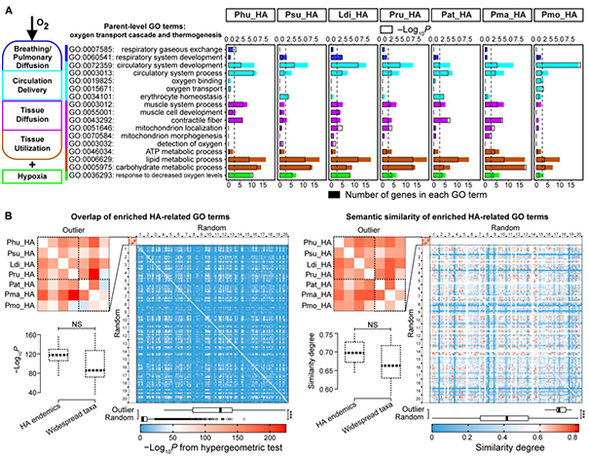 Parallel genomic responses of East Asian tits to historical climate change and high elevation adaptationThe response of closely related species to shared environmental stress is likely to invoke congruent or similar physiological and/or morphological adaptations, a process termed “parallel evolution”. However, parallelism is typically stronger at the phenotypic level, while genetic solutions to achieve these phenotypic similarities may differ, especially for polygenic traits.Dec 08, 2021
 -
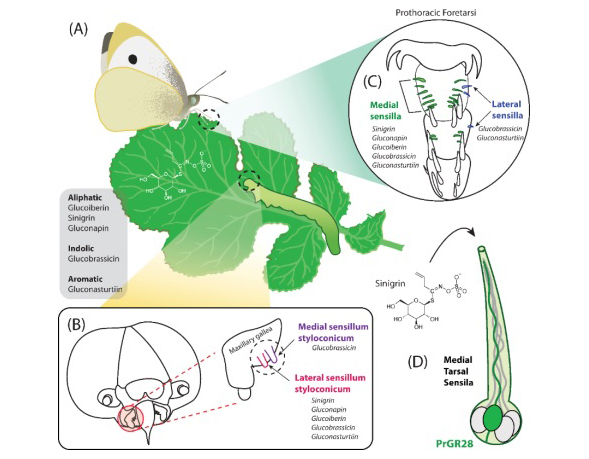 The gustatory receptor tuned to sinigrin is discovered in the cabbage butterfly Pieris rapaeOn July 15, 2021, the team of Prof. Chen-Zhu Wang from Institute of Zoology, Chinese Academy of Sciences have published the research paper entitled “Identification of a gustatory receptor tuned to sinigrin in the cabbage butterfly Pieris rapae” in PLoS Genetics. This study uncovers that a bitter receptor in P. rapae is tuned to sinigrin, one of the most common and abundant glucosinolates in cruciferous plants.Aug 10, 2021
 -
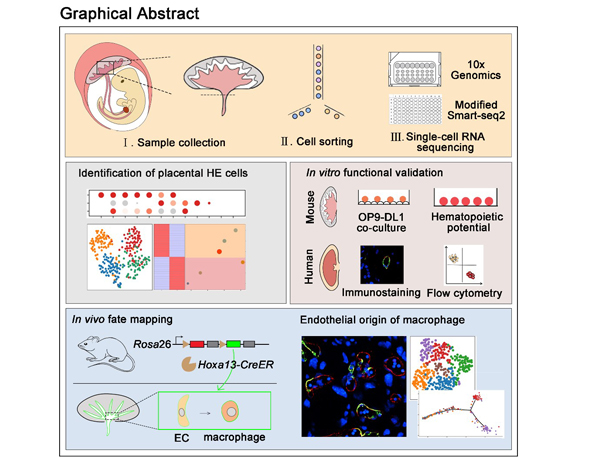 Developmental Cell | De novo generation of macrophage from placenta-derived hemogenic endotheliumOn June 30, 2021,Professors Feng Liu (from Institute of Zoology, Chinese Academy of Sciences), Jing-Dong J. Han (from Peaking university), Hongmei Wang (from Institute of Zoology, Chinese Academy of Sciences) and Berthold Gottgens (from University of Cambridge) collaborate on a paper entitled “De novo generation of macrophage from placenta-derived hemogenic endothelium” in Developmental Cell journal. This work identifies and experimentally validates that a CD44+ subpopulation of placental endothelial cells (ECs) exhibits hemogenic potential. Importantly, lineage tracing using the newly-generated Hoxa13 reporter line shows that Hoxa13-labeled ECs can produce placental macrophages, named Hofbauer cell (HBC)-like cells.Jun 30, 2021
 -
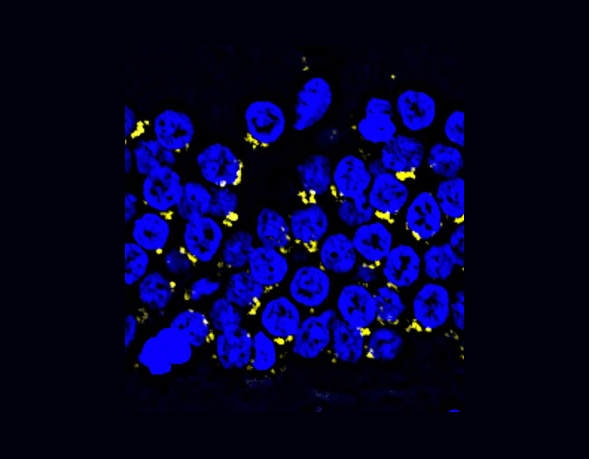 Tick tock in the brain: Scientists provide molecular insights into primate hippocampal agingDeep inside our brain is a region called the hippocampus. It plays a crucial role in learning and memory, and its progressive deterioration with age is functionally linked to a variety of human neurodegenerative diseases. But what drives it down the path of aging?May 31, 2021
 -
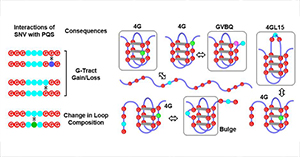 Researchers from the CAS disclose genome-wide variations in the secondary structure of DNA among peopleThe genome of each individual varies. A common type of variation, termed Single nucleotide variation (SNV), represents a difference in a single nucleotide in the genomes of peoples. As the most studied genetic variations, SNPs are associated with some important traits of an individual, such as susceptibility to disease, drug response, medical outcome, and other health-related phenotypes.May 18, 2021
 -
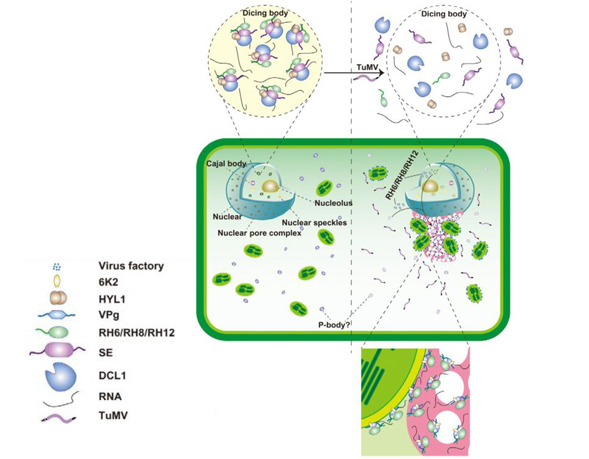 Researchers Reveal the Formation and Disassembly Mechanisms of Membraneless OrganellesApr 29, 2021