Research Progress
-
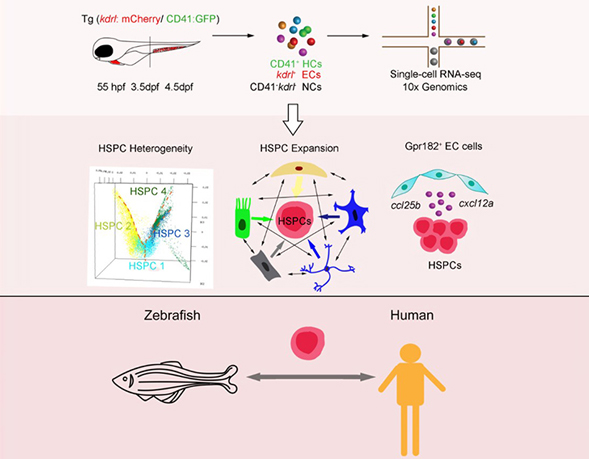 Researchers Provide Novel Insight Into the Hematopoietic Stem and Progenitor Cell Expansion At Single-Cell ResolutionApr 01, 2021
 -
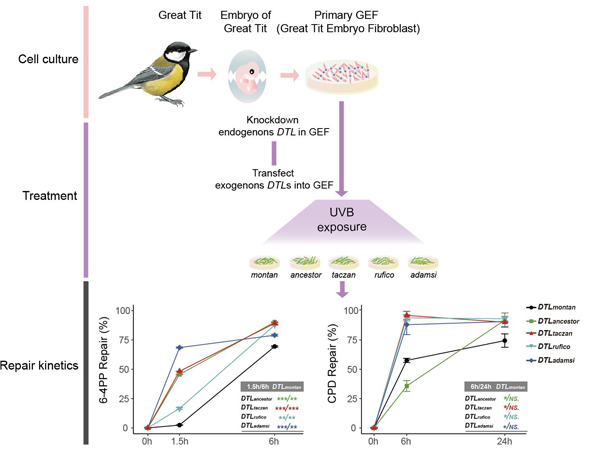 Scientists unravelled similar but not identical evolutionary trajectories of birds in adaptation to a high-elevation environmentMar 23, 2021
 -
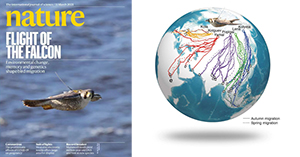 Scientists decoded the spatio-temporal dynamics of bird migration routes and the genetics basis of long-distance migrationTo address these issues, the research team led by Dr. Xiangjiang Zhan from the Institute of Zoology of the Chinese Academy of Sciences, published a study entitled “Climate-driven flyway changes and memory-based long-distance migration” in Nature on March 3th, 2021 (Gu et al., 2021). In the study, they integrated two state-of-art techniques, satellite telemetry tracking and whole genome sequencing, and established a continental-scale migration system of peregrine falcons (Falco peregrinus) in Eurasian Arctic.Mar 04, 2021
 -
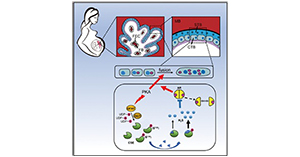 Researchers reveal the roles of protein O-GlcNAcylation in modulating human placental trophoblast differentiationO-linked β-N-acetylglucosamine (O-GlcNAc) is a reversible and ubiquitous post-translational modification in eukaryotic cells, which are extensively involved in a wide range of cellular processes. There has been evidence suggesting the involvement of O-GlcNAcylation in embryonic development or fetal health, whereas the underlying mechanisms remain illusive.Feb 25, 2021
 -
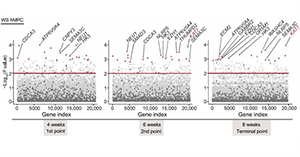 Scientists develop a new gene therapy strategy for delaying agingHow many aging-promoting genes are there in the human genome? What are the molecular mechanisms by which these genes regulate aging? Can gene therapy alleviate individual aging? Recently, the researchers from the Chinese Academy of Sciences have shed new light on the regulation of aging.Jan 07, 2021
 -
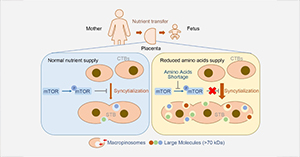 Researchers reveal a unique cellular strategy in placenta to compensate nutrient deprivation during pregnancyDuring pregnancy, the health of the mother and the fetus is dominated by the appropriate allocation of nutrients between the two individuals. Maternal-fetal material exchange predominantly depends on the placenta, which plays critical roles in sensing fetal nutritional demand, modulating maternal supply, and adapting its nutrient transport capacity. Failures in the regulatory network of placental functions lead to serious clinical complications, such as preeclampsia, recurrent miscarriage, and fetal growth restriction (FGR), etc. FGR is defined as the pregnancy bearing a fetus that does not grow to full potential, largely due to insufficient delivery of maternal nutrition by the placenta. Annually, ~30 million newborns worldwide suffer from FGR, which leads to increased perinatal morbidity and mortality and multiple lifelong health problems.Jan 07, 2021
 -
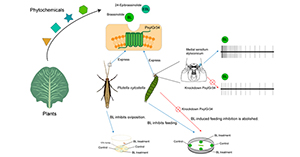 Discovery of a gustatory receptor tuned to the steroid plant hormone brassinolide in the diamondback mothDec 18, 2020
 -
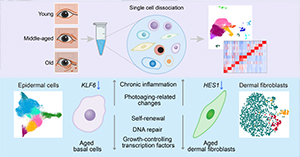 Researchers Provide Novel Insights into Human Skin AgingIn human, the skin is one of the organs that exhibit early-onset aging-associated dysfunction. As a critical physical barrier, the skin is composed of a variety of cell types including fibroblasts and keratinocytes. Due to its high heterogeneity, it is difficult to accurately reveal the cell type-specific molecular mechanisms of human skin aging, which hinders our understanding of human skin aging and the development of interventions for human skin aging and related diseases.Nov 25, 2020
 -
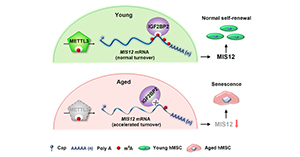 Researchers reveal that METTL3 counteracts premature aging via m6A-dependent stabilization of MIS12 mRNARecently, scientists from the Institute of Zoology and Beijing Institute of Genomics of the Chinese Academy of Sciences have collaborated jointly to unveil a novel mechanism of METTL3 as well as m6A in regulating human stem cell senescence. This study entitled “METTL3 counteracts premature aging via m6A-dependent stabilization of MIS12 mRNA” was published online in Nucleic Acids Research on October 9th, 2020. Using including Hutchinson-Gilford progeria syndrome (HGPS) and Werner syndrome (WS), researchers explored the function of m6A and its core methyltransferase METTL3 during human stem cell aging and revealed that MIS12 functions as a downstream factor of METTL3/m6A in regulating hMSC senescence.Oct 10, 2020
 -
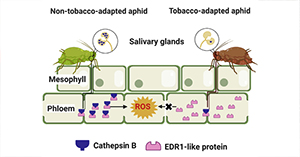 An aphid-secreted salivary protease activates plant defense in phloemScientists from Institute of Zoology CAS and CAS center for Excellence in Biotic Interactions have discovered that tobacco plants can recognize a potential elicitor protein cathepsin B3 (CathB3) in aphid saliva, and suppress aphid feeding by triggering ROS accumulation in phloem.Oct 09, 2020