Research Progress
-
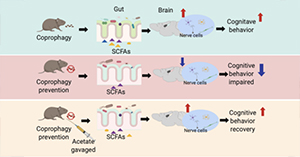 Coprophagy Regulates Energy Metabolism and Cognitive Behavior by Affecting Gut MicrobiotaJul 10, 2020
 -
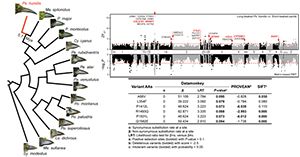 A novel major locus in regulating beak evolution of the Ground titClassical quantitative genetics has found that most of phenotypes are polygenic traits. Under this polygenic model, natural selection often acts on many loci simultaneously, resulting in the combination of a few loci with major effects and many loci with small effects controlling adaptive changes in phenotypes, which presents challenges to our understanding of genetic basis underlying polygenic traits. Avian beak is a typical polygenic trait, which is the consequence of the variety of functions that beaks serve (e.g. foraging, preening, nest-building, cavity excavation) and the diversity of habitats where birds live. As a result, genetic basis of beak morphology was well studied in chickens and Darwin’s finches, yet remains poorly understood in wild birds. Due to the characteristics of being more likely to be fixed by strong selective coefficients and less susceptible to loss by genetic drift, major loci may be more relevant to phenotypes and easier to be detected from the genome.Jul 07, 2020
 -
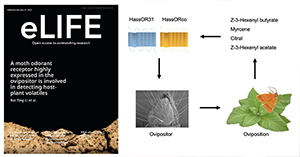 Tobacco budworm moths have receptors in their egg-laying organs that detect odorants produced by their host plantsWhen most insects reproduce they lay eggs that hatch into juveniles known as larvae. To provide good sources of food for the larvae, the adult insects have to carefully select where to lay the eggs. Host plants produce specific sets of chemicals known as odorants that the adult insects are able to smell using proteins called odorant receptors.Jul 07, 2020
 -
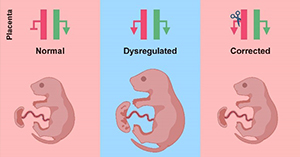 Researchers Discover That Overcoming the Genomic Imprinting Barrier Improves Mammal CloningSomatic cell nuclear transfer (SCNT, also known as cloning) technology holds great potential in animal production and regenerative medicine. However, the extremely low efficiency and frequently observed abnormalities in cloned embryos limit the development and application of this technology. Although the cloned embryos harbor complete genomic DNA sequence, multiple epigenetic barriers are the limiting factors of cloning efficiency.Jun 19, 2020
 -
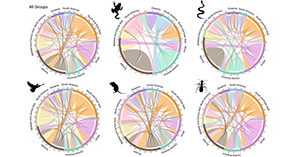 Animal invaders threaten protected areas worldwideProtected areas (PAs) are regarded as the cornerstone of native biodiversity. However, their unique role in protecting native biodiversity is likely to be affected by increasing invasive alien species in the era of globalization. Unfortunately, the extent to which protected areas worldwide are resistant to incursions of alien species remains unknown. Identifying those PAs harboring a high richness of alien species, their potential drivers and future invasion risks will shed important light on these incursions, and provide important information to develop efficient prevention, detection, and rapid response strategies against new invasions in PAs.Jun 12, 2020
 -
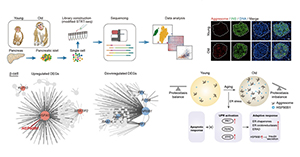 Researchers Provide Novel Insight into Primate Islet AgingAs the population ages, the incidence of diabetes in China has risen sharply over the past 30 years. At present, the number of patients with diabetes in China has exceeded 100 million, along with nearly 500 million pre-diabetic adults (impaired glucose tolerance), which poses a serious challenge to the prevention and treatment of aging-related chronic diseases (e.g. diabetes) in China. Aging-related progressive degeneration of pancreatic islet cells contributes to impaired glucose tolerance and diabetes. However, the high heterogeneity of islet cells, limited source as well as ethical restrictions hinder our understanding of human islet aging and the development of interventions against islet aging and associated diseases.Jun 11, 2020
 -
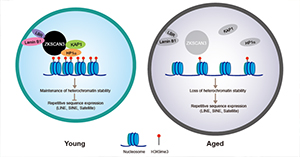 Scientists reveal novel epigenetic mechanism underlying human stem cell agingZinc finger protein with KRAB and SCAN domains 3 (ZKSCAN3) is a member of the Kru?ppel-associated box domain zinc finger protein (KRAB-ZFP) family, with a SCAN domain in the N-terminus (SCAN-ZFPs). Emerging evidence has shown that ZKSCAN3 negatively regulates autophagosome formation by repressing the expression of autophagy-related genes. However, previous studies on ZKSCAN3 have been primarily based on tumor cell lines or animal models whereas the functions of ZKSCAN3 in normal human diploid cells was unclear.May 20, 2020
 -
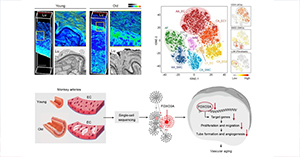 Researchers Provide Novel Insights into Primate Arterial AgingCardiovascular disorders are leading causes of morbidity and death worldwide. Age-associated changes in arterial properties, such as endothelial dysfunction and structural alterations, are considered to be initial events in the development of atherosclerosis. Due to the high heterogeneity of vascular cells from different sources, our understanding of human arterial aging and the development of interventions against human arterial aging and associated diseases are hindered.May 08, 2020
 -
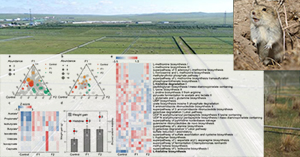 Climate change shapes the vole population by regulating the composition and metabolism functions of vole’s gut microbiotaClimate change is taking place at a greater pace with an increase in extreme events, including significant shifts in precipitation patterns. Recent studies suggested that climate change can have a large impact on the population dynamics of many species. Shifts in precipitation can affect plant community composition and primary productivity, especially in arid and semi-arid environments, and hence trigger cascading changes in resources availability for herbivores. Resource availability, in turn, alters small mammal (e.g., rodent) fitness and population dynamics. Although the bottom-up effect of precipitation on rodents has been well documented, few studies have evaluated the relationship between precipitation and rodent populations using manipulative field experiments. Likewise, field studies rarely identify the physiological mechanisms causing the bottom-up regulation of plants on rodents, or examine the role of host-microbiota interactions in this regulation.Apr 22, 2020
 -
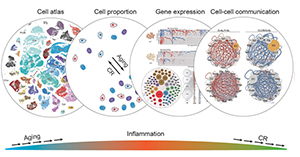 Novel Insight into the first multi-tissue single-cell transcriptomic atlases in Rattus norvegicus aging and CRFeb 28, 2020